
Adaptive Running Equipment: What Runners With Amputation Should Know
Adaptive Running Equipment: What Runners With Amputation Should Know
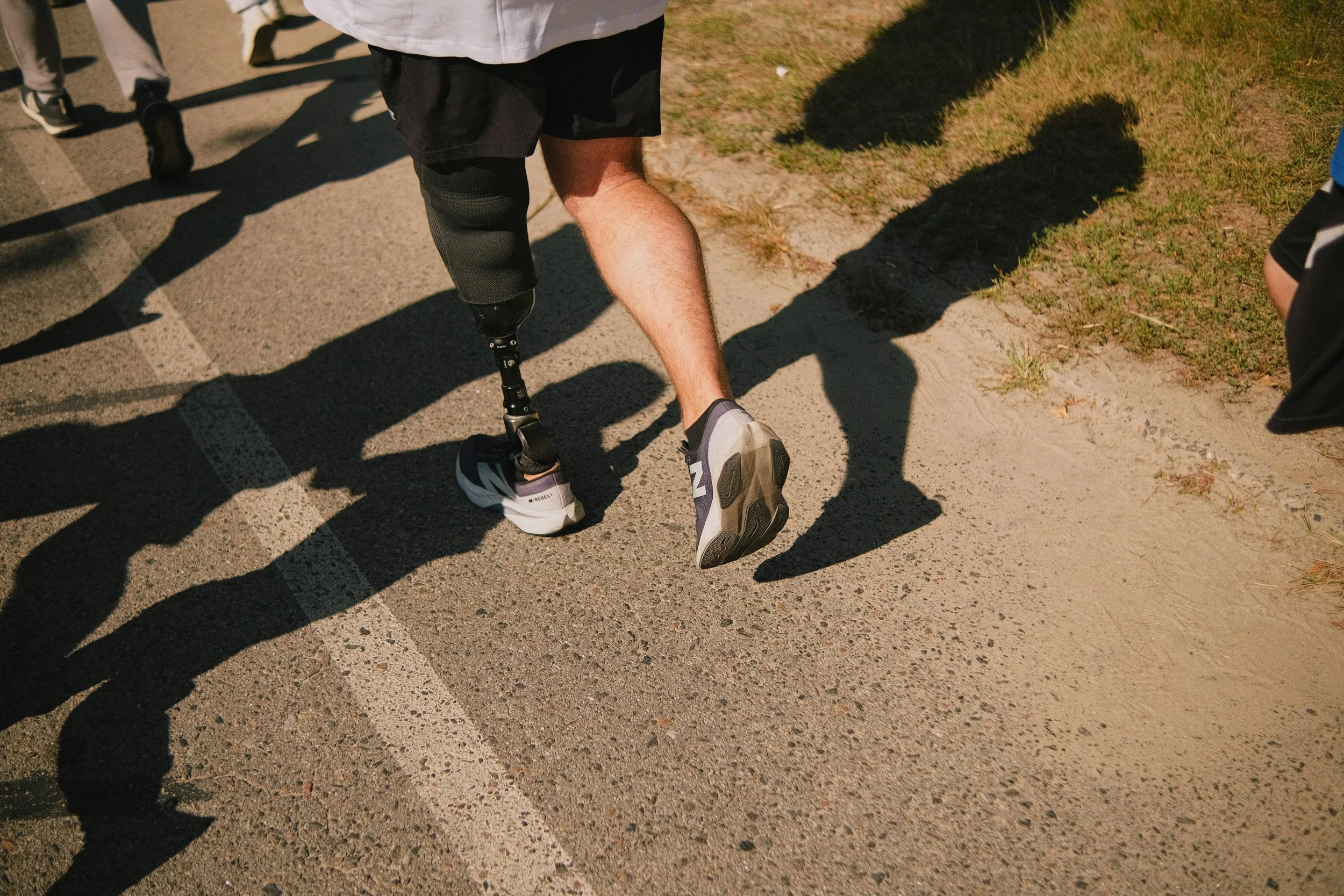
Running with a limb difference is not about overcoming limitations—it is about adaptation, precision, and individualized support. Advances in adaptive running equipment have made it possible for runners with amputation to train, compete, and thrive at every level, from first-time races to Paralympic sport.
At Oregon Running Clinic, we believe that understanding the interaction between equipment, biomechanics, and training load is essential for long-term performance and injury prevention.
No Two Adaptive Runners Are the Same
One of the most important principles in adaptive running is that no two runners move or load their bodies the same way, even when their amputation level appears similar. Differences in residual limb length, strength, socket fit, prosthetic setup, and training background all influence how a runner moves.
This variability means that equipment and training decisions must be individualized. What works well for one runner may not be appropriate—or safe—for another.
Running-Specific Prosthetics: Designed for Performance
Running-specific prosthetics (RSPs) are fundamentally different from daily-use prostheses. Rather than prioritizing stability for walking, they are designed to store and return energy during running.
Blade performance is influenced by stiffness, shape, length, curvature, and overall geometry. Importantly, blades designed for sprinting behave differently than those intended for endurance running. Research shows that there is no single optimal blade setup for distance running; ideal characteristics vary depending on speed, distance, and the individual athlete.
Prosthetic Stiffness and the Limits of Adaptation
A key difference between biological limbs and prosthetic limbs is adaptability. While an intact limb can adjust stiffness in response to changes in speed or step frequency, a prosthetic limb cannot fine-tune itself in the same way. Its stiffness remains relatively constant throughout a run.
As a result, the unaffected limb often takes on a greater share of the mechanical and metabolic load, particularly during longer distances. Over time, this asymmetry can influence injury risk and recovery if not carefully managed.
The Socket: A Critical (and Often Overlooked) Component
The socket—the interface between the residual limb and the prosthesis—plays a major role in comfort, control, and biomechanics. Suspension method, pressure distribution, and limb volume changes can all affect how a runner moves.
A poorly fitting or uncomfortable socket may lead to compensatory movement patterns, reduced training tolerance, or skin breakdown. For runners, socket fit is not just about comfort; it directly affects efficiency and injury risk.
Biomechanics: What Matters More Than What “Looks” Different
Adaptive runners may demonstrate visible differences such as leg length asymmetry, hip hiking, trunk compensation, or changes in stride on the unaffected limb. These patterns are not inherently problematic—they are often effective strategies.
The clinical question is not whether movement looks different, but whether it leads to excessive stress on specific tissues over time. Understanding why a runner moves the way they do is far more important than forcing symmetry.
Injury Risk and Musculoskeletal Considerations
Research shows that runners with amputation often experience higher loads on the unaffected limb, particularly at the hip. Over time, this can increase the risk of joint degeneration, tendon changes, and bone stress injuries. The residual limb may also be at higher risk for reduced bone mineral density.
Because of these factors, strength training, especially for the hips and core, is essential. Tendon health, fueling, and recovery must also be carefully considered as part of a long-term running plan.
Training Load: A More Conservative, Thoughtful Approach
Due to asymmetrical loading and a higher metabolic cost of running, adaptive runners may benefit from more conservative return-to-run progressions than able-bodied runners. Monitoring volume, intensity, and surface changes is critical, as is incorporating cross-training and scheduled recovery.
Time away from the running prosthesis, proper fueling, and attention to residual limb skin tolerance are all important components of sustainable training.
The Bottom Line
Adaptive running is not about compensation—it is about thoughtful adaptation. With the right equipment, individualized training strategies, and collaborative care, runners with amputation can pursue performance goals while protecting long-term health.
At Oregon Running Clinic, we take the time to understand each runner’s movement, equipment, and goals, and we work closely with prosthetists to support safe and effective running.